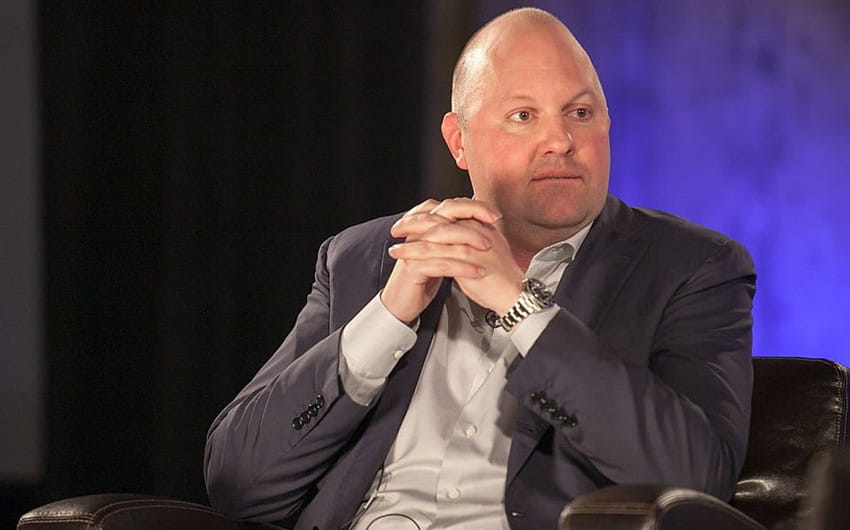
Marc Andreessen Net Worth in 2026: How the a16z Founder Built His Fortune
When people search for Marc Andreessen net worth, they usually want one clean number. The best public estimates in 2026 put him at roughly $2 billion, give or take, depending on market conditions and how different outlets value his private holdings. That range matters because Andreessen’s wealth isn’t tied to one public stock you can check in real time. It’s built from a long chain of tech outcomes: early internet software, major exits, board roles, and decades of venture capital investing through Andreessen Horowitz (often called a16z).
Estimated Marc Andreessen net worth in 2026
A grounded estimate for Marc Andreessen’s net worth in 2026 is about $1.8 billion to $2.2 billion, with around $2 billion being the most commonly cited figure. You’ll sometimes see slightly higher or lower numbers because private-company values change, venture funds have different performance cycles, and public market swings can affect how investors value tech portfolios overall.
Also, “net worth” is not the same as “assets under management.” a16z may manage tens of billions for its investors, but that is client capital. Andreessen’s personal wealth is what he personally owns or controls after obligations and expenses, not the size of the funds he helps run.
Why Marc Andreessen’s wealth is confusing to people
Andreessen’s story is unusual because he’s famous in two different ways. First, he’s an early internet builder—someone who helped shape the web before most people knew what the web was. Second, he’s a venture capital power figure—someone who helped fund multiple generations of Silicon Valley companies. Those two careers create two separate streams of wealth: wealth from building companies and wealth from investing in companies.
The second stream is where people get lost. Venture capital wealth is not like a normal salary. It’s often delayed. It arrives in bursts. And it can be enormous when a fund hits a few breakout winners. That’s why you can see a billionaire who doesn’t look like a typical “celebrity rich” person, because the money is tied to ownership, not performance fees or public appearances.
The first fortune: building the early web
Marc Andreessen became widely known in the 1990s as a key figure in early web browsing technology and the internet boom era. That early work mattered because it placed him at the center of the first massive wave of consumer internet adoption. In simple terms, he was early to the platform that changed everything.
When you build something foundational in a platform shift, two things happen. You get credibility that lasts for decades. And you get early wealth that gives you leverage for your next moves. That leverage is one of the most underrated wealth-building tools in tech. It lets you take bigger swings, invest earlier, and access better opportunities.
The second fortune: exits, reinvention, and staying in the game
After the early internet era, Andreessen didn’t fade into a “former tech star” story. He stayed in the game. He moved through different tech cycles, built and backed companies, and kept learning how value is created in new eras. That matters because the biggest fortunes often come from surviving multiple cycles, not from winning one moment.
Tech wealth is rarely linear. There are booms and busts. There are reputational swings. There are years where nothing seems to happen and then one investment changes everything. The people who become truly wealthy aren’t always the ones who had the loudest first win. They’re often the ones who kept playing long enough for compounding to do its work.
The main engine: Andreessen Horowitz and the power of venture capital
The biggest driver of Andreessen’s 2026 net worth is his role as a co-founder and general partner at Andreessen Horowitz (a16z). Venture capital firms don’t just make money from “being famous investors.” They make money from owning pieces of companies that grow dramatically over time.
There are two basic ways venture firms earn:
- Management fees: steady annual fees to run the funds (this pays salaries and operations).
- Carry (carried interest): a share of the profits when investments pay off (this is where personal wealth can explode).
The carry is the key. If a fund backs a few companies that become massive, the profits can be so large that the carry becomes life-changing—even for people who were already wealthy. And because a16z has been a major player across multiple eras of tech investing, Andreessen’s net worth is often discussed in “billionaire” terms rather than “successful investor” terms.
Why a16z fundraising matters to his net worth
When a16z raises large new funds, it signals continuing influence and a continuing pipeline for future wins. Big funds can support bigger investments, longer time horizons, and more chances to be involved in category-defining companies. This does not mean Andreessen personally receives the entire fund amount. But it does increase the firm’s footprint and the potential scale of future carry if the funds perform strongly.
It also reinforces something important: Andreessen’s wealth is tied to a machine that keeps running. He’s not relying on one old exit. He’s connected to a firm that can create new opportunities every cycle.
How venture wealth actually shows up in real life
Venture wealth is often invisible until it becomes impossible to ignore. Here’s why. Many investments are private for years. The public can’t see the exact value of those shares. Then an IPO happens, or a major acquisition happens, or a secondary sale happens, and suddenly the value becomes clearer.
That timing creates a strange effect: people assume someone is “suddenly” richer. In reality, they were building toward that outcome for years. The moment you hear about it is just the moment the market finally put a label on it.
For someone like Andreessen, whose career spans decades of tech investing, it’s more accurate to think of his wealth as a series of overlapping waves. While one set of investments is maturing, another set is being made, and another set is being exited. That overlap is a form of stability, even in a risky industry.
Key reasons his net worth stays in the $2B neighborhood
So why do many estimates cluster around $2 billion in 2026 instead of $200 million or $20 billion? Because his wealth is likely built from several strong pillars that add up, but none of them alone is usually described as “owning a huge percentage of one mega-company.” His fortune appears to come from a blended portfolio:
- Early tech outcomes that created seed wealth and long-term credibility
- Equity ownership through venture investing across many companies
- Carried interest from fund performance over time
- Board roles and advisory influence that often come with equity upside
- Private investments and asset diversification beyond a single headline company
When those are combined, “about $2 billion” becomes a believable public estimate, especially when multiple net-worth trackers land in the same general range.
What could push his net worth higher in the next few years
Even for someone already in billionaire territory, net worth can move quickly. The biggest upside drivers for Andreessen are the same forces that built his wealth in the first place:
Major exits. If a handful of a16z-backed companies have breakout IPOs or acquisitions in a strong market, carry payouts can rise sharply.
Private market revaluations. If private holdings become more valuable due to revenue growth or industry momentum (especially in areas like AI infrastructure and enterprise software), estimates can jump.
Fund performance cycles. Venture funds are long-duration vehicles. One vintage year can change the personal wealth picture for general partners.
Broader tech market strength. When the tech sector is valued higher overall, everything connected to it tends to be valued higher too, including private portfolios.
What could pull the estimate down
On the flip side, tech wealth can shrink on paper during risk-off periods. A few factors could compress net worth estimates:
- Private market downturns that lower valuations and reduce expected carry
- Longer exit timelines if IPO markets slow or acquisitions get harder
- Concentration risk if too much value is tied to a handful of big positions
- Fee and competition pressure across venture capital as the industry evolves
This is why a range is more honest than a single “perfect” number. Public estimates tend to lag the real story anyway, because the real story is hidden inside private holdings and long-term fund economics.
A simple way to understand Marc Andreessen’s wealth
If you want a clean mental model, think of Andreessen’s net worth like a three-layer stack.
Layer one is early internet wealth. That gave him runway, reputation, and access.
Layer two is venture ownership. That’s the long compounding engine—owning pieces of many companies instead of relying on one.
Layer three is time. Decades in the same high-upside ecosystem allows repeated opportunities and compounding results.
That stack is how a person becomes a billionaire without needing to be a pop-culture celebrity. The money comes from ownership and outcomes, not from being constantly visible.
So, what is Marc Andreessen’s net worth in 2026?
The most realistic public estimate is that Marc Andreessen’s net worth in 2026 is around $2 billion, with a reasonable range of $1.8 billion to $2.2 billion depending on private valuations and market conditions. The bigger truth behind the number is simple: his wealth is the result of being early to the internet, then spending decades owning pieces of the companies that shaped what the internet became.
image source: https://www.thedissident.news/the-techno-fascist-soul-of-marc-andreessen/