Jyoti Amge: The World’s Shortest Living Woman and Fearless Actor From India to Hollywood
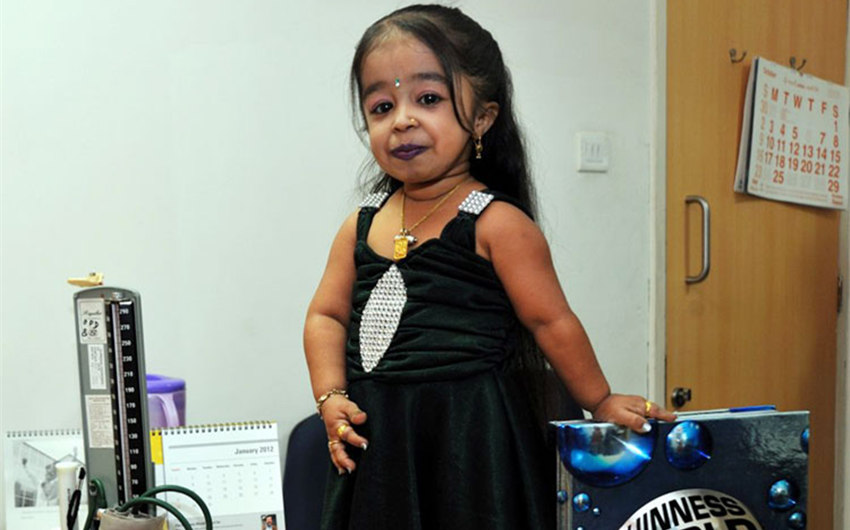
Jyoti Amge is famous for something you can’t fake: she’s the world’s shortest living woman, officially recognized for her height and her story. But reducing her to a record misses the real point. She’s also an actor, a public figure who’s navigated intense attention with surprising calm, and a person who’s built a life far bigger than the number on a measuring tape.
Who Is Jyoti Amge?
Jyoti Amge is an Indian actor and Guinness World Records titleholder, widely known as the shortest living woman. She was born in Nagpur, Maharashtra, and grew up in a world that constantly reminded her she was different. Instead of shrinking into that difference, she leaned into visibility—showing up publicly, doing interviews, traveling, and taking on acting opportunities that put her in front of global audiences.
Her public identity sits at the intersection of inspiration and curiosity. People discover her through the record first, then stick around because she carries herself with a mix of confidence and composure that feels earned. She isn’t trying to convince you she’s “normal.” She’s showing you that a full life doesn’t require fitting an average template.
Why She Holds a World Record
Jyoti is recognized by Guinness World Records as the shortest living woman. That title is based on her height as an adult, measured officially under Guinness guidelines. The “living” part matters because Guinness categories shift over time as people’s ages, measurements, and record statuses change. In her case, the record became a major gateway to international visibility—media coverage, documentary-style features, and public appearances where people who had never heard her name suddenly wanted to know her story.
But a world record is only a snapshot. It captures a physical fact, not a whole human being. What’s more interesting is how she’s handled what the record brings: attention from strangers, constant questions, and the pressure to represent something bigger than herself.
Her Condition and Daily Life Realities
Jyoti’s height is linked to a form of dwarfism. In practical terms, that means everyday life involves constant adaptation—clothing, furniture, transportation, and public spaces that aren’t designed for her body. These aren’t “cute quirks.” They’re logistics she has to solve every day.
It also affects health considerations. People with dwarfism can face unique medical challenges, and their bodies may respond differently to standard dosing, equipment sizing, or physical strain. Jyoti has lived in the public eye long enough that many people assume they know her life, but most of her daily reality is probably like anyone else’s: routines, frustrations, planning, and the occasional “this world was not built with me in mind” moment.
Growing Up in the Spotlight Without Choosing It
When someone becomes known for a physical record, the attention often arrives early and fast. For Jyoti, that meant cameras and headlines while she was still young. That’s a complicated thing to grow up with. The internet doesn’t just watch; it comments. It turns people into symbols. It asks invasive questions under the disguise of “curiosity.”
What stands out in Jyoti’s public presence is that she rarely looks rattled by it. She speaks with a steadiness that suggests she’s practiced setting boundaries—even if those boundaries are subtle. There’s a difference between being friendly and being available. Jyoti has learned how to be the first without becoming the second.
How She Became an Actor
Acting requires something many people underestimate: comfort with being looked at. Jyoti already lived with visibility, so the camera itself wasn’t the hardest part. The harder part is the same challenge every actor faces: being taken seriously.
When your body is the first thing people notice, you have to work harder to be seen as a performer, not a novelty. Jyoti’s career choices show that she’s aware of this. She has stepped into roles that place her in cinematic worlds where difference isn’t hidden—it’s framed. The key is whether the framing is respectful, interesting, and human.
American Horror Story and “Ma Petite”
One of Jyoti’s most widely recognized roles is her appearance in American Horror Story: Freak Show, where she played a character known as Ma Petite. The season’s aesthetic leaned into old-world carnival imagery, and her presence became a major talking point for viewers. For many people, this was their first time seeing her not as “the record holder,” but as an on-screen character inside a narrative.
That role also came with complicated cultural baggage. “Freak show” storytelling can easily slip into exploitation if it treats bodies as props rather than people. The difference is in tone and intent—whether the story gives characters dignity and emotion, or just uses them as shock value. Regardless of how viewers interpret the season, Jyoti’s casting made one thing clear: she was stepping into mainstream pop culture, not staying confined to “human interest” segments.
What Makes Her Public Image Unusual
Most public figures become famous for what they do: acting, singing, sports, politics. Jyoti became famous first for what she is physically, then expanded her identity outward. That order is unusual—and it creates a constant challenge: people want to talk about her body before they talk about her choices.
Yet she continues showing up in ways that push the conversation forward. She attends events, does media, travels, collaborates, and builds a life that signals agency. In other words, she doesn’t let the public decide what her identity should be. She gives people a larger picture and lets them adjust.
How Fame Affects Someone With a Rare Condition
Fame already distorts reality. Add a rare physical condition, and the distortion gets worse. People feel entitled to stare. They feel entitled to ask personal questions. Some treat it like entertainment. Others treat it like inspiration content—meaning well, but still reducing a person to a story that makes the viewer feel something.
Jyoti’s visibility can be powerful for representation, but representation comes with costs. You become “the example.” You become “the proof.” You become “the headline.” That’s why it’s important to remember she’s allowed to be ordinary in private. She’s allowed to have bad days. She’s allowed to be annoyed. She’s allowed to be tired of explaining herself.
What She Represents Without Being Reduced to a Slogan
It’s tempting to treat Jyoti as a motivational poster: “Nothing can stop you!” That framing sounds nice, but it can be unfair. It implies that if you struggle, you simply didn’t “try hard enough.” Real life isn’t that simple.
A more honest view is this: Jyoti represents adaptability and presence. She’s a reminder that visibility can be reclaimed—especially by people who are constantly treated as “different.” She’s also a reminder that confidence isn’t always loud. Sometimes it’s just showing up again and again, letting people stare, and refusing to act ashamed.
How She Navigates Style and Self-Presentation
One quietly interesting part of Jyoti’s public life is how intentional her presentation can be. When she appears at events, she often looks polished and deliberate—hair, makeup, outfits that signal she wants to be seen as glamorous, not hidden. That matters because it pushes back on a common cultural script that treats people with disabilities or uncommon bodies as either “invisible” or “inspirational,” but rarely “stylish.”
Her self-presentation suggests a simple truth: you don’t have to choose between being taken seriously and being visually expressive. You can be both.
Featured Image Source: https://en.wikipedia.org/wiki/Jyoti_Amge