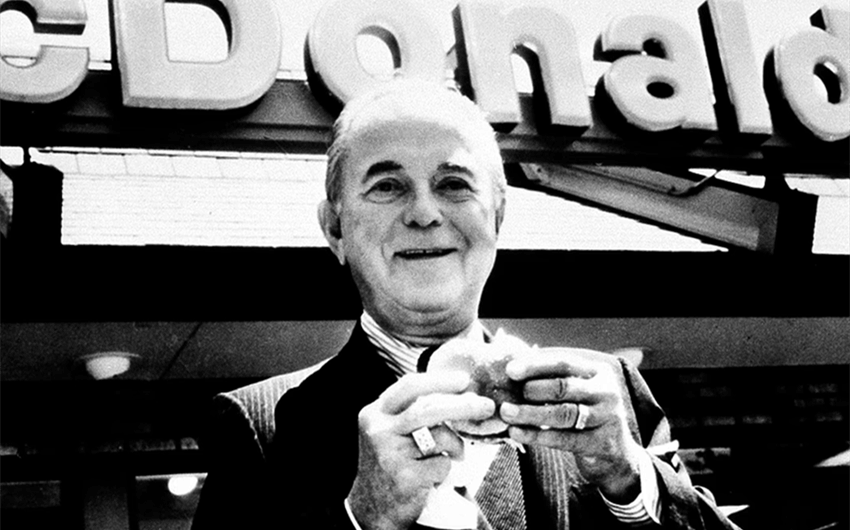
Ray Croc Net Worth Story: How McDonald’s Built a Billion-Dollar Empire Over Time
When people search for ray croc net worth, they’re usually trying to understand one thing: how a man who wasn’t born into wealth ended up owning a business that reshaped the way the world eats. The answer isn’t “he sold a lot of hamburgers.” The real answer is that Ray Kroc built a system that printed predictable revenue, then he tied that system to something even more powerful than food: real estate.
Estimated Ray Kroc net worth
Ray Kroc died in 1984, and his net worth at the time is most often estimated at around $600 million. Adjusted to today’s dollars, that’s roughly $1.7–$1.9 billion, depending on the inflation measure you use. Either way, the story is the same: he became one of the wealthiest figures in American business by turning a simple restaurant concept into a scalable money machine.
That number also makes sense when you remember what “net worth” means. It’s not just salary. It’s the total value of assets he owned or controlled, minus debts. For Kroc, the biggest assets weren’t spatulas or cash registers. They were ownership rights, franchise income streams, and the long-term value of locations that kept earning year after year.
Before the billions: a salesman with a sharp eye
Ray Kroc didn’t start as a restaurant genius. He was a salesman. And like many great salesmen, he learned two skills that later became priceless: how to spot a product that works, and how to scale it through relationships. He spent years selling paper cups and then milkshake machines. That might sound ordinary, but it trained him to understand volume, repetition, and consistency. He wasn’t chasing one lucky break. He was chasing a reliable system.
That’s why the McDonald brothers impressed him so much. Their restaurant wasn’t just popular. It was efficient. Orders moved fast. The menu was simple. The kitchen was designed like a production line. In a world where many restaurants were messy and slow, the brothers had something that looked like the future. Kroc didn’t just see a burger stand. He saw a blueprint that could spread across the country.
The key insight: consistency is more valuable than creativity
Plenty of restaurants have great food. Very few can deliver the same experience in different cities, day after day, with different employees, and still keep customers happy. Kroc understood that consistency is what allows scale. And scale is what creates wealth.
He pushed McDonald’s toward a model where every detail could be repeated. The menu stayed tight. The cooking process became standardized. The look and feel of the restaurant became familiar. That familiarity built trust. Trust built traffic. Traffic made the model attractive to franchisees, and franchisees brought expansion money.
At this stage, it’s tempting to assume the wealth came mainly from franchise fees. That was part of it, but it’s not the full story. Franchise fees alone can be good money, but they don’t always create massive personal fortunes. Kroc’s wealth grew because he kept stacking income streams in a way that made the company stronger every time it expanded.
The franchising engine: other people pay to grow your business
Franchising, at its best, is a beautiful business model. A franchisee invests their own money to open a location. They hire staff. They manage daily operations. They take on local risk. Meanwhile, the parent company earns fees and ongoing royalties for the use of the brand and system.
Kroc leaned hard into this. He wanted operators who would follow the system and protect the brand. He also wanted enough locations that the company’s name became unavoidable. Every new restaurant increased the brand’s power, and that brand power made the next restaurant easier to open. That is how a business starts to snowball.
Once the franchise network grows, wealth stops coming from a single restaurant’s profit. It comes from the network itself. Even small percentages become enormous when they apply to thousands of locations and massive sales volume.
The real wealth secret: the land under the golden arches
If you only remember one part of the Ray Kroc net worth story, remember this: real estate. Kroc and his team realized that controlling the land could stabilize income and increase power over franchisees. Instead of just collecting a royalty based on sales, the company could own or control the property and lease it to franchisees.
This changes everything.
Owning property creates value in two ways. First, it can generate reliable rent income. Second, the property itself can rise in value over time. McDonald’s locations were often placed in high-traffic areas. When you own high-traffic real estate, you’re not just in the burger business. You’re in the location business.
There’s also a control advantage. If a franchisee breaks rules or fails to run the business properly, a company that controls the lease has leverage. That leverage protects the brand. Brand protection keeps customers coming. And customers keep the entire machine profitable.
In simple terms, Kroc helped build a model where McDonald’s wasn’t just selling food. It was collecting money from the entire ecosystem: the restaurant’s sales, the franchise relationship, and the property underneath.
Why this model created long-term wealth, not just quick profit
Many businesses have a hot streak and then fade. Kroc built McDonald’s to last. The model didn’t rely on one celebrity chef or one trendy product. It relied on routine, repetition, and systems. The company could keep growing even if individual stores had ups and downs, because the network was diversified across regions and cities.
That’s the kind of structure that investors love. It’s also the kind of structure that compounds wealth. As more restaurants opened, the brand became stronger. As the brand became stronger, the real estate became more valuable. As the real estate became more valuable, the company’s income became more stable. Stability supported more growth, and the cycle continued.
This is why people often say Kroc didn’t just build a restaurant chain. He built a business platform. The platform was designed to grow larger without breaking.
Ownership and the value of the company itself
Net worth isn’t only about yearly income. It’s also about what you own. As McDonald’s grew into a dominant company, the value of the business increased dramatically. When a founder or key leader holds meaningful ownership, the company’s growth directly increases personal net worth.
Kroc’s wealth wasn’t built from a single payout. It was built from years of compounding value. The business became worth more because it had a proven model, strong branding, and expanding footprint. That growing company value became part of his personal balance sheet.
This is an important point because it helps explain why the net worth number at his death could be so high. Even if he wasn’t taking “insane” paychecks, the value tied to the company and its related assets could still be enormous.
The tension that shaped the empire
No honest story of McDonald’s growth can ignore the tension between Kroc and the McDonald brothers. The brothers created the original system that impressed him. Kroc pushed it into national expansion. The relationship became complicated, and the business path eventually led to Kroc gaining control.
From a pure business standpoint, Kroc’s drive was clear: he wanted speed, scale, and control. From a human standpoint, it’s also a reminder that building an empire often involves conflict. The lesson isn’t that conflict is “good.” The lesson is that high-stakes businesses create high-stakes disagreements, especially when ownership, vision, and credit are on the line.
Either way, the end result was the same: McDonald’s became a global force, and Kroc’s wealth grew alongside it.
What happened after Ray Kroc died
When Kroc died in 1984, his wealth didn’t vanish. It transferred. His widow, Joan Kroc, became known for major philanthropic giving, which brought public attention back to the size of the fortune. Large-scale giving often signals what many people already suspected: the underlying wealth was massive, and it was built on assets designed to keep producing value.
This is another reason the “today’s dollars” version of his net worth matters. Wealth built through ownership and property doesn’t just sit still. It evolves. It can grow through investment returns. It can shift through estate planning. And it can be used to fund massive charitable projects that continue a public legacy long after the original builder is gone.
What you can learn from the Ray Kroc net worth story
The most useful lessons here are not about burgers. They are about structure.
- Build systems, not just products. Systems scale better than one-off creativity.
- Create repeating revenue. Royalties and rent are more stable than chasing new customers from scratch.
- Own the critical asset. For McDonald’s, the critical asset was often the land and location power.
- Let growth compound. A proven model, repeated thousands of times, becomes a force of its own.
These are the kinds of principles that can apply to many industries, not just fast food. The details change, but the pattern stays familiar: control the system, protect the brand, and make revenue repeat.
So, what was Ray Kroc’s net worth really about?
If you boil it down, Ray Kroc’s net worth wasn’t primarily about being a talented cook or even a brilliant marketer. It was about building a structure where other people could expand the brand using their own capital, while the company collected money through multiple channels and gained leverage through real estate.
That’s why the estimated numbers are so large. A business model that works at one location can make you comfortable. A business model that works at thousands of locations can make you historic.
image source: https://www.theatlantic.com/business/archive/2017/01/ray-kroc-mcdonalds-america/514538/