Sheikh Mohammed Net Worth in 2026: Dubai Ruler’s Wealth Explained Clearly Today
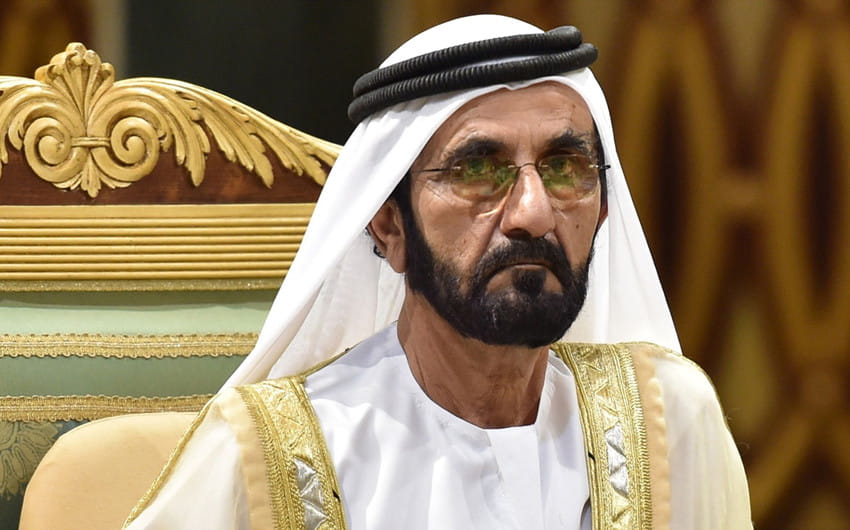
When someone searches for Sheikh Mohammed net worth, they’re usually asking about Sheikh Mohammed bin Rashid Al Maktoum, the Ruler of Dubai and the Vice President and Prime Minister of the United Arab Emirates. People want one clean number, but with royals and heads of government, money is rarely simple. The biggest reason is that personal wealth and state-linked assets can overlap, and the public does not get a full financial statement. Still, we can explain what most estimates say in 2026 and why the range exists.
Estimated Sheikh Mohammed net worth in 2026
In 2026, the most commonly repeated public estimates place Sheikh Mohammed’s net worth in the $14 billion to $16 billion range. A practical midpoint is around $15 billion. You may also see figures reported in British pounds, sometimes around £14 billion, which can look different just because of currency conversion and timing.
It’s important to treat this as an estimate, not a confirmed figure. Unlike public-company CEOs who must file detailed disclosures, royal family finances are not typically reported in one clear, audited document. So the best way to understand the number is to focus on what drives it: ownership, long-term assets, and the value of influence over major business groups connected to Dubai’s growth.
Why his net worth is hard to “prove”
Net worth sounds straightforward: assets minus debts. But for leaders in a monarchy-style system, three things make the math difficult.
First, the line between “personal” and “state-linked” can blur. Dubai has government-owned or government-backed companies that shape the city’s economy. Outsiders may not know which assets are personally owned, which are held in family structures, and which are part of the state.
Second, many holdings are private. Private companies do not publish the same level of detail as public companies. Even when you know the name of a business group, you may not know the exact ownership splits.
Third, asset values move. Real estate prices change. Company values shift. Currency exchange rates change. One estimate can look “wrong” a year later even if nothing dramatic happened, simply because markets moved.
This is why you’ll see net worth pages disagree. They are making educated guesses using public clues, but they don’t have the full ledger.
The core engine behind the wealth: ownership and business groups
Most of Sheikh Mohammed’s wealth story ties back to how Dubai transformed into a global center for tourism, real estate, trade, airlines, and finance. That transformation was not just about buildings. It was about building an ecosystem where major projects feed each other.
At the center of that ecosystem are large holding groups and government-linked companies that shaped Dubai’s modern economy. These groups include major interests in:
- real estate development and property management
- hospitality and luxury tourism
- ports, logistics, and global trade infrastructure
- telecommunications and business parks
- investment arms with international exposure
The key idea is this: Dubai’s growth created assets that don’t just earn money once. They can earn repeatedly through rent, fees, leases, tourism spending, and long-term land value. When someone has ownership or control at that level, the wealth can rise into the tens of billions.
Real estate: the quiet giant behind many royal fortunes
If you want to understand why many royal net worth estimates become enormous, start with real estate. Dubai’s rise as a global city pushed land and development value upward for decades. When major land holdings and development entities are involved, the value doesn’t come only from selling properties. It also comes from:
- long-term leases and rental income
- hotel and resort revenue streams
- commercial property income from offices, malls, and business districts
- the rising value of prime locations over time
Real estate is also hard for outsiders to price accurately. A single high-profile site can be worth a lot more than it looks on paper, especially when it sits inside a high-traffic district. This is one reason net worth estimates for Dubai’s ruler can vary. If one estimator assumes stronger real estate values or broader ownership reach, their number jumps.
Global investments and international assets
Another reason the estimates stay high is that Dubai’s leadership and top families have historically invested outside the UAE as well. Wealthy families often diversify into:
- international property holdings
- stakes in global companies and funds
- private equity-style investments
- luxury assets that hold value over time
International assets matter because they can reduce risk. If one sector slows down, another may stay strong. And when investments are spread across countries, the portfolio can keep growing even if local cycles change.
It’s also common for high-net-worth families to use layered ownership structures. That can make it difficult for the public to track what is personally owned versus owned through family entities or state-adjacent groups. The result is more estimation and fewer “confirmed” numbers.
High-profile projects and “Dubai as a brand”
Dubai’s modern identity is tied to headline projects, luxury tourism, and a constant push to be seen as a global destination. When a city becomes a brand, its leader’s influence can translate into real economic value. That doesn’t mean the leader personally owns every famous building. It means the system they shaped creates wealth through:
- tourism and hospitality growth
- property demand driven by global attention
- foreign investment attracted by stability and status
- business relocation and long-term infrastructure building
In that kind of environment, the largest fortunes often come from the “platform” rather than a single business. It’s the same reason some founders get richer than entertainers. The platform keeps producing value.
What could pull the net worth estimate down?
People sometimes assume a royal fortune only goes up. In reality, several factors can pull net worth estimates down or add uncertainty.
Large legal settlements and personal obligations. High-profile legal outcomes can move large sums. They don’t always change the entire wealth picture, but they can be big enough to affect headlines and estimates.
Debt inside major business groups. Large development and investment groups may carry debt, especially in real estate-heavy economies. Debt can be healthy when managed well, but it changes net worth math because liabilities count.
Market cycles. Real estate markets can cool. Tourism can shift. Global interest rates can change the cost of borrowing. When the world economy tightens, it can affect valuations, even for wealthy leaders.
How a source defines “personal wealth.” Some estimates assume broader family control equals personal wealth. Others try to count only assets clearly tied to one individual. The definition alone can change the number by billions.
What could push the estimate up?
On the flip side, there are reasons why some estimates could rise over time.
Long-term land value growth. Prime land tends to become more valuable over the long run, especially in a global city with limited central space.
Compounding investment returns. Even conservative investing can add billions over decades when the starting base is large.
Growing value of private companies. Private holdings can grow without outsiders noticing until a major deal or announcement reveals how big they have become.
Currency moves. If a portion of the portfolio is priced in pounds, euros, or other currencies, exchange rates can change what the fortune looks like in dollars.
A simple way to understand the “real” number
If you want a clean mental model, think of Sheikh Mohammed’s wealth in three layers.
Layer one: personally connected assets. These are holdings, property, and investments that are widely treated as his personal wealth.
Layer two: family and closely linked entities. These can be partly personal and partly shared or structured in ways outsiders can’t fully see.
Layer three: state-linked influence. This is the biggest source of confusion. Dubai’s economy is built through large, powerful institutions that are not always clearly personal property, yet they are strongly shaped by the ruling family’s leadership.
Most public net worth estimates try to describe layers one and two. They usually avoid fully counting layer three, because it’s not the same as personal ownership. That’s why a mid–teens billions estimate is common: it’s huge, but it still tries to stay in the “personal wealth” lane rather than claiming he owns the entire state.
So, what is Sheikh Mohammed’s net worth in 2026?
The most reasonable answer is that Sheikh Mohammed bin Rashid Al Maktoum’s net worth in 2026 is commonly estimated around $14 billion to $16 billion, with about $15 billion as a practical midpoint. The exact number is not publicly confirmed, and estimates vary mainly because of private ownership structures and the complicated boundary between personal wealth and state-linked assets.
In plain terms: he is widely viewed as one of the wealthiest rulers in the world, and the size of Dubai’s business ecosystem makes a multi-billion net worth range believable even when the exact figure remains private.
image source: https://www.bbc.com/news/world-middle-east-51762543